What Does Utnapishtim Teach Gilgamesh About Immortality
The theme, immortality appears in stories from the Epic of Gilgamesh, which was composed by ancient Sumerians roughly around 600 B.C., to present day works of fiction in the twenty first century. Gilgamesh, a figure of celestial stature, allows his mortal side to whittle away his power after the death of Enkidu. The Epic of Gilgamesh ends as Gilgamesh is traveling home from his visit with Utnapishtim. Gilgamesh has lost the magic plant that Utnapishtim gave him that conferred eternal youth,. What does Gilgamesh learn from this story about the nature of human beings and of the gods? Do you think there is a sense of divine justice for human beings here or not? Although Gilgamesh wants to live forever, he cannot even stay awake for seven days, as Utnapishtim proves by having his wife bake seven loaves of bread while Gilgamesh sleeps.
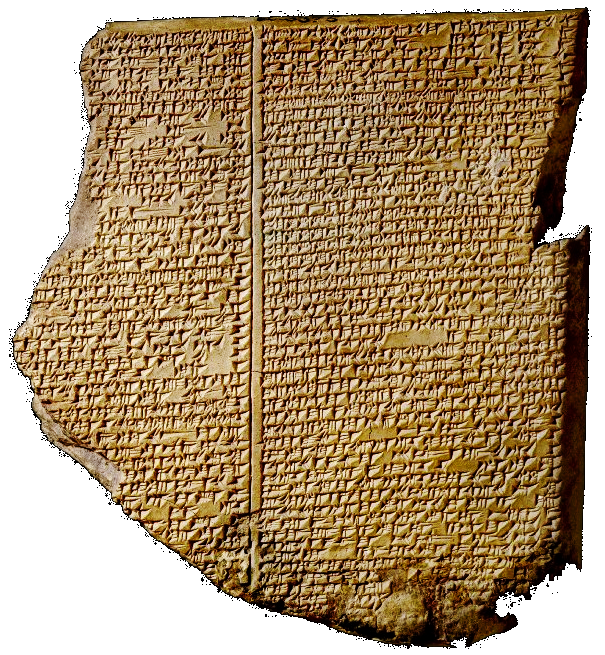
The Search for ImmortalityIn The Epic of Gilgamesh the main character, Gilgamesh, is searching for immortality. This want is brought about by deep feelings held by Gilgamesh for his dead friend Enkidu. From this, Gilgamesh finds himself being scared of dying. This fear pushes Gilgamesh to search for the power of, which is believed to be held only by women because of the fact that they can reproduce. This takes him on a long and tiresome journey to a land where no mortal has gone before. The search by Gligamesh is fueled by the desire to play a part in reproduction. His journey begins at Mount Mashu, the mountain which describes a woman in the part that her 'paps reach down to the underworld.'
Referring to ’s breast’s down. Before he may enter the mountain, he meets two half female, half dragon figures guarding the entrance. They begin asking why he has come; 'No man/ born of woman has done what you have/ asked, no mortal man has ever gone into the/ mountain.' This mountain is off limits to mortal beings, he should not be there Gilgamesh is alloud in and goes through twelve leagues of darkness before he reaches the golden garden of the goddesses.Upon arriving there he is greeted by Shamash, the Sun God, who tells him, 'You will never find the/ life for which you are searching.' This upsets Gilgamesh because he has traveled so far to now just 'sleep and let the earth cover my head forever?' From leaving Shamash, Gilgamesh is sent to see Siduri. 'Beside the sea she lives, the woman of/ the vine, the maker of wine' and she does not want to allow Gilgamesh pass.
Gilgamesh pleads with her that since he has seen her do not let him see death. She answers, 'Gilgamesh, where/ are you hurrying to? You will never find that life for which you are looking.' Once again Gilgamesh hears that what he is looking for does not exist.
She tells him to enjoy life to its fullest because that is what a man is there for. That does not satisfy Gilgamesh and he wishes to know where to find Utnapishtim, the only man with eternal life. To find him, Gilgamesh must locate Urshanabi, the ferry woman. She then proceeds to take him over the Ocean and over the waters of death. The Search for Immortality In The Epic of Gilgamesh the main character, Gilgamesh, is searching for immortality.
This want is brought about by deep feelings held by Gilgamesh for his dead friend Enkidu. From this, Gilgamesh finds himself being scared of dying.
This fear pushes Gilgamesh to search for the power of immortal life, which is believed to be held only by women because of the fact that they can reproduce. This takes him on a long and tiresome journey to a land where no mortal has gone before. tags: Epic Gilgamesh essaysFree Essays 725 words (2.1 pages). Through the many of mankind’s tales of adventure the search for immortality is a very common theme. Many heroes have made it the objective of their travels and adventures.
This is no different in The Epic of Gilgamesh and The Odyssey. The heroes in both are tempted by the offer of immortality, however each of them turns it down for their own reasons. In The Odyssey, Odysseus rejects the offer of immortality from the goddess Calypso long after he discovers the true nature of the afterlife after travelling to Hades. tags: Epic of Gilgamesh, The OdysseyResearch Papers 858 words (2.5 pages). Desperate Search for Immortality in the Epic of Gilgamesh The search for immortality seems to be an obsession for many men and women all throughout history. In the Epic of Gilgamesh a man investigates the possibility of immortality following the saddening death of his friend, his brother Enkidu. That man, Gilgamesh, feeling the fear of the possibility of his own mortality which was before unrealized before the death of Enkidu, searches for a way to preserve himself.
Is it truly that Gilgamesh searches for a physical immortality or more of a spiritual immortality. tags: Epic Gilgamesh essaysFree Essays 830 words (2.4 pages). The search for immortality seems to be an obsession for many men and women all throughout history. In the Epic of Gilgamesh a man investigates the possibility of immortality following the saddening death of his friend, his brother Enkidu. That man, Gilgamesh, feeling the fear of the possibility of his own mortality which was before unrealized before the death of Enkidu, searches for a way to preserve himself. Is it truly that Gilgamesh searches for a physical immortality or more of a spiritual immortality.
tags: Epic of Gilgamesh, Mesopotamia, Ishtar, LifeResearch Papers 823 words (2.4 pages). Death and Immortality in The Epic of Gilgamesh The search for immortality has been a major concern for many men and women all throughout history. True love and immortality in life would be a dream come true to many. To spend time with a special someone, the person one feels closest to, and never have to say good-bye would greatly appeal to most people. But when death steps into the picture, even with all the pain and devastation, one starts to re-evaluate themselves. In The Epic of Gilgamesh, Gilgamesh explores the possibility of immortality following the saddening death of his friend and brother, Enkidu.
tags: The Epic of GilgameshResearch Papers 1379 words (3.9 pages). In order to be considered an epic poem there has to be a hero who goes on a journey and returns having obtained some object or knowledge that will help them throughout their life. This was also the argument of a famous scholar of Greek myth who said, “all heroic quests can be summarized in one verb: ‘to get.’” He also said that they must realize that there is something that they are lacking or receive some order to search for something.
He believes that the only way for this quest to be a success would be for the hero to bring something back after having used force or a form of negotiation. tags: Epic poetry, Epic of Gilgamesh, Atra-Hasis, LifeResearch Papers 1108 words (3.2 pages). The Epic of Gilgamesh, the oldest surviving epic in history, reflected life as it was during the early Bronze Age. Many of the themes that the epic reveals are still valuable today in what it can teach us about how society was in the past. More importantly, Gilgamesh’s story teaches the reader how the lessons of his experience are significant to future generations. Such as, views on life and death and the search for knowledge and immortality.
The search for immortality has plagued the minds of men and women for millenniums. tags: Epic of Gilgamesh, Immortality, Life, SumerResearch Papers 905 words (2.6 pages). The Epic of Gilgamesh is Truely an Epic An epic is an extended narrative poem in elevated or dignified language, celebrating the feats of a legendary or traditional hero. The main characteristics of an epic as a literary genre is that it is a long poem that tells a story, it contains an epic hero, its hero searches for immortality (but doesn't find it physically, only through fame), gods or other supernatural beings are interested and involved, and it delivers an historical message. The Epic of Gilgamesh is classified as an epic because it fits all the characteristics of an epic as a literary genre.
tags: Epic Gilgamesh essaysResearch Papers 1699 words (4.9 pages). Grieving for days, lost in thoughts, and stricken with immense sadness and loss of direction, Gilgamesh laments for days over the loss of his friend Enkidu. Gilgamesh shouts aloud the following statement in regards to his current state of bereavement: “Me. Will I too not die like Enkidu.
Sorrow has come into my belly. I fear death; I roam over the hills. I will seize the road; quickly I will go to the house of Utnapishtim, offspring of Ubaratutu” (Gardner Tablet IX 2-7). Gilgamesh so much feared death that he threw away his honor as a warrior in order to obtain immortality. tags: Epic of Gilgamesh EssaysResearch Papers 1847 words (5.3 pages). What does it mean to be immortal. Most people assume that ‘immortality’ is distinguished by a person living forever, or an undying entity beyond the limitations of death.
But why would anyone really want this kind of immortality. The very concept seems to only appear in works of fiction, and most individuals don’t recognize that immortality can come with a hefty price. This is the very case when taking into account one of the oldest literary works in the world, the epic poem of Gilgamesh. The hero, Gilgamesh, achieved immortality in death, and although it was not in the traditional sense, his presence became immortal through literature and history. tags: Epic of Gilgamesh, Immortality, Death, LifeResearch Papers 790 words (2.3 pages). So Gilgamesh finds himself in Dilmun, the place where Utnapishtim resides. Utnapishtim asks why he has come.
What Does Utnapishtim Teach Gilgamesh
Gilgamesh proceeds to tell Utnapishtim the whole story about Enkidu dying, how far he has traveled, who he has met, and finally that he wants to know how to become immortal like him. 'There is no permanence,' Utnapishtim states, 'It is only the nymph of the/ dragonfly who sheds her larva and sees the sun in her glory.' This statement is saying that only woman live forever through reproduction. Utnapishtim continues to tell Gilgamesh how he got here and asks 'As for you, Gilgamesh,/ who will assemble the gods for/ your sake, so that you may find that life for which you are searching?' Utnapishtim offers him a test and all he has to do is stay up for six days and seven nights. Gilgamesh can not do it, and he immediately falls asleep.Utnapishtim wakes him after seven days and tells Urshanabi to take Gilgamesh to be cleaned, then send him back to where he came from.
But before Gilgamesh could leave, Utnapishtim told him of a plant underwater that would restore a mans youth. Gilgamesh then left to find this marvelous plant before he headed home.
He found it and brought it with him. Urshanabi and Gilgamesh traveled a long ways before stopping for the night. While stopped, Gilgamesh went to go bathe in a well. But, deep in that well there was a serpent. 'It rose out of the water and snatched it/ away, and immediately it sloughed its/ skin and returned to the well.' Gilgamesh is left with nothing. The serpent was a symbol of a woman, and now Gilgamesh see that he can not have the power to bear everlasting life.In short, Gilgamesh ends up dying, like all men must do.
He learned that there is no immortal life for men and that women are still the only immortals because of reproduction.
I would like to include a comment which Nawab has made on my last post, as it is very insightful and important:-‘Very dear Nuria,Many heartfelt thanks for the very interesting exploration of the saga of Gilgamesh. It is very insightful. Some thoughts that came up while reading this portion: Gilgamesh smashing the ‘stone things’ and the snakes brings to mind the Buddhist mantram, Gate gate, paragate, parasamgate, Bodhi svaha!

Gone, gone, gone beyond, gone beyond beyond, hail the Goer! The path of Gilgamesh to find immortality does not allow him to be beholden to any ‘method’ – perhaps that is why in his crossing, he himself becomes the mast, and he takes the skin off his body for a sail (though admittedly a skin borrowed from another creature). And reflecting on the Urnu-snakes and the stone things, of course snakes can also make us think of the power spiralling up the spinal axis, which yogis call kundalini. In that light, maybe the ‘stone things’ represent the radiant psychic centres, which in some conditions shine like jewels. So why does Gilgamesh smash this ‘system’? Perhaps because every form must some day be scattered, and the ultimate crossing means to leave them all behind. Experience of the various centres can take us to the margin of the ocean, but to cross the ocean we leave them on the shore.’I love the idea that the ‘stone things’ represent the radiant psychic centres, which shine like jewels, especially as everything in the garden of Dilmun – the flowers and the thorns, described as being made of precious stones or crystals.
It is a powerful image and concept to ponder.For Gilgamesh the night sea journey is almost complete. He himself has become the mast and his skins, the sails, which power the boat towards that sacred place at the mouth of the rivers. The garden of Dilmun, the Sumerian paradise – the place where the sun rises and the Land of the Living.‘Now Utnapishtim, where he lay at ease, looked into the distance and he said in his heart, musing to himself, ‘Why does the boat sail here without tackle and mast; why are the sacred stones destroyed, and why does the master not sail the boat? That man who comes is none of mine; where I look I see a man whose body is covered with skins of beasts. Who is this who walks up the shore behind Urshanabi, for surely he is no man of mine? ‘ He asks himself all the questions that Gilgamesh has had to answer before when faced with Siduri and then Urshanabi.Gilgamesh replies ‘Gilgamesh is my name. I am from Uruk, from the house of Anu.’ This is a very short and focussed reply!
What Does Utnapishtim Teach Gilgamesh About Immortality Lyrics
His name, his city and his spiritual lineage. Anu is the Sumerian father of the gods – the god of the firmament – ‘the great above’. In a sense, one could say that it is like our idea of ‘the One’ or God – who is everything. Nothing exists save Allah, Allah alone exists. In the Sumerian cosmology there was first, the primeval sea, from which was born the cosmic mountain consisting of heaven (An), and earth (Ki). Anu had an important temple in Uruk: He was a supreme and remote deity.Note. In Sumerian theogony, An (heaven) was the first-born of the primeval sea.
He was the upper heavens, the firmament, not the air that blows over the earth. He was united to earth (Sumerian Ki) and begot Enlil, the god of the air. At this time the world was still in darkness and Enlil the air, was imprisoned between the dark ceiling of heaven, a night sky without stars, and the earth’s surface.
So Enlil begot the moon Nana (Semitic Sin), who travelled in a boat bringing light to the lapis lazuli heavens; and Nana in turn begot the sun Utu (Semitic Shamash), and Inanna (Semitic Ishtar) goddess of love and war.Utnapishtim is portrayed as lying at ease and seems very human in his attributes. He was last on the king list before the flood, where Gilgamesh was said to be fifth on the king list after the flood. Therefore, Utnapishtim could be seen as a forefather of Gilgamesh. He does not recognise Gilgamesh, so Gilgamesh again tells Utnapishtim at great length, about his terrible journey, his grief for Enkidu, his fear that the same fate awaits him, and of his desperation to avoid it if possible. The old man asks Gilgamesh why he grieves about mortality when nothing lives forever? The old man says the gods established that men would suffer death, and that when the gods give life, they also decide the day of death. He says that death is our certain destiny, even if we don’t know when it will happen.Gilgamesh then says ‘I look at you now, Utnapishtim, and your appearance is no different from mine; there is nothing strange in your features.
I thought I should find you like a hero prepared for battle, but you lie here taking your ease on your back. Tell me truly, how was it that you came to enter the company of the Gods and to possess everlasting life?’Utnapishtim tells him that he will reveal the secret of the gods and this ends the tablet or section, which tells of Gilgamesh’s search for everlasting life.The story of the flood has been inserted at this point in the Epic of Gilgamesh, but I do not believe that it belongs here. Some think that it does not belong in the Epic of Gilgamesh at all. We are not told what the secret of the gods in. However, there is a comment by Enlil, god of the air, which I find revealing.
‘It was not I that revealed the secret of the gods; the wise man learned it in a dream. This wise man was Utnapishtim, who was the only one with his wife, to survive the flood, and he was warned by a dream.So in my understanding, Utnapishtim as a great Teacher and enlightened being, spends time teaching Gilgamesh. He passes on his secret knowledge of the mysteries of Life and of Light.In the next episode we learn more of the tests which Gilgamesh endures, while with Utnapishtim, and of his transformation.Sandars, N.K. The Epic of Gilgamesh, Penguin Classics 1977 P105Ibid P 24.