Shape File Viewer Free
ArcReader is a free, easy-to-use desktop mapping application that allows you to view, explore, and print maps and globes.Anyone with ArcReader can view high-quality interactive maps authored by ArcMap and published with the ArcGIS Publisher extension. Shapefile viewer free download - Shapefile Reader, Free Photo Viewer, Manco Shapefile Editor, and many more programs.
Open Shp File
This is because you can do it all with free GIS software.The best part is:These free GIS software give you the firepower to get the job done as if you’re working with.We’ve, but these 13 (out of 30) reign supreme for free mapping software. 1 QGIS – Formerly Quantum GISHighlights: Community All-in-one Cartography Plugins GISGeography FavoriteAfter the, we illustrated with 27 differences why QGIS is undoubtedly the #1 free GIS software package.is jam-packed with hidden gems at your fingertips. For example, you can automate map production, process geospatial data, and generate drool-worthy cartographic figures.There’s no other free mapping software on this list that lets you map like a rock star than QGIS.boost this mapping software into a state of epicness.
If the tool doesn’t exist, search for a plugin developed by the QGIS community.Volunteer effort is key to its success. The support is impressively great.If you’re still searching for free GIS software, you’d be insane not to download the free GIS software QGIS. Here’s your to get your feet wet.In February 2018, QGIS 3 brings a whole new set of cartography, 3D and analysis tools. We’ve got you covered on how to find all of its newest features and plugins:READ MORE: 2 gVSIGHighlights: 3D Tools Compatibility CAD Tools Data ManagementIn 2004, the emerged as a free, open source GIS software option in Spain.We illustrate in this why we like it SO much:gvSIG really outperforms QGIS 2 for 3D.
It really is the best 3D visualization available in open source GIS.The NavTable is agile in that it allows you to see records one-by-one vertically.The CAD tools are impressive on gvSIG. Thanks to the OpenCAD Tools, you can trace geometries, edit vertices, snap and split lines and polygons.If you need GIS on your mobile phone, gvSIG Mobile is perfect for field work because of its interface and GPS tools. 3 Whitebox GATHighlights: LiDAR Tools Hydrology GISGeography FavoriteYes, (Geospatial Analysis Toolbox) is #3 on the list of open source, free GIS software.Unbelievably, Whitebox GAT has only been around since 2009 because it feels so fine-tuned when you see it in action.There’s a hydrology theme around Whitebox GAT. It actually replaced – a tool for hydro-geomorphic applications.Whitebox GAT is really a full-blown open-access GIS and remote sensing software package.Where it shines is LIDAR!With no barriers, Whitebox GAT is the swiss-army knife of.The LiDAR toolbox is a life-saver. For example, LAS to shapefile is an insanely useful tool. But you may need a Java update to go in full throttle though.The cartographic mapping software tools are primitive compared to QGIS.But overall Whitebox GAT is solid with over 410 tools to clip, convert, analyze, manage, buffer and extract geospatial information.I find it amazing this free GIS software almost goes unheard of in the GIS industry.Get more useful knowledge from the. 4 SAGA GISHighlights: Geoscientific Tools Ease of Use GISGeography Favorite(System for Automated Geoscientific Analyses) is one of the classics in the world of free GIS software.It started out primarily for terrain analysis such as hillshading, watershed extraction and visibility analysis.Now, SAGA GIS is a powerhouse because it delivers a fast growing set of geoscientific methods to the geoscientific community.Enable multiple windows to lay out all your analysis (map, histograms, scatter plots, attributes, etc).
It provides both a user-friendly GUI and API.It’s not particularly useful in cartography but it’s a lifesaver in terrain analysis.is easy. The morphometry tools are unique including the SAGA topographic wetness index and topographic position classification.
If you have a DEM, and don’t know what to do with it – you NEED to look at SAGA GIS.Overall, it’s quick, reliable and accurate. Another option is R. Because it does not rely on a GUI, some people find it tricky to get started.
But once you figure out the syntax and command-line workflow, it is undoubtedly one of the most powerful GIS systems going. Regarding gestatistics, it simply trounces competitors due to the vast array of contributed packages provided by statisticians:A great introductory resource on R for spatial data is provided by James Cheshire and myself and is free to download here:Note the opening quote by Gary Sherman who created QGIS:“With the advent of ‘modern’ GIS software, most people want to point andclick their way through life.
That’s good, but there is a tremendous amountof flexibility and power waiting for you with the command line. Free nature screensaver download. Many timesyou can do something on the command line in a fraction of the time youcan do it with a GUI.”.
Nice article. A few comments about FalconView. FalconView was originally part of a flight planning software suite developed by Georgia Tech for the National Imagery and Mapping Agency (NIMA, the predecessor to NGA). It allowed military pilots to use digital versions of NIMA flight planning charts, including taking their flight plans and overlaying the plans on the charts. Pilots could also overlay multiple point symbols on the charts. Others soon discovered it was useful for making and printing basic maps quickly. I haven’t used it in years.
It looks like GT continues to add functionality to the software. I am a single individual looking to map a woodland which I have just purchased.
Using GIS I would like to create maps of the woodland including the locations of individual tree species,their health,ground type,animal holes etc, so that I can make informed decisions on sustainable forest management. I currently have an iPad with gps capabilities to use on the site to collect the data, and will be buying a new computer soon, but am having difficulty finding the right program to use. Could you please help me with any suggestions about software and if it is Apple compatible many thanks John. Could you perhaps help me with some advice?I’ve been typesetting an annual South Africa wine guide for 17 years and, more or less by default, have been drawing the maps that show the locations of the wineries.
I’ve been doing these in CorelDraw, usually tracing an image of a map imported into a layer reserved for that. There are 20-odd maps showing the locations of several hundreds of wineries.I would love to be able to do this properly, using real-world co-ordinates, and showing the topography. I would like to add all the wineries, and output windows showing specific regions at different scales (some maps cover large areas; other cover much smaller areas densely populated with wineries).Where should I start? I’d like at least to begin with free software, to see whether I get the hang of it. Can you suggest what would be the best to start with?Many thanksGawie du Toit. I should probably write a whole article how to do this, but I’ll go ahead and list the steps below.Step 1) You’ll need to download GIS software and data. My suggestion is to use QGIS and Natural Earth data.
The reason why you’ll want to use Natural Earth is because it’s completely public use and they give permission to modify, disseminate and use the data in any manner. Here’s how to download –Step 2) The next thing you’ll have to do is go into the ‘Quick Start’ folder in Natural Earth and open up the.QGS file in QGIS by double clicking it.Step 3) I don’t know if you have coordinates for each winery or not. Either way, you’ll have to create a shape file with each winery.
This might take some time, but once it’s created you will always have that data to work with as a layer. There’s a button on the left panel ‘New Shapefile Layer’. Make sure you choose ‘Point’. Give the shape file a name. You can add fields to your shapefile, which are like columns in a spreadsheet. For example, you can add the field ‘NAME’ as TEXT 100 length, which will be each winery name.
Click ‘ADD FIELD TO LIST’ and save your shape file somewhere.STEP 4) Now, it’s time to add point locations on the map. You’ll need some imagery to see where each winery point should go. Go to Plugins Manage and Install Plugins Search for the Open Layers plugin and Install it. Under Web OpenLayersPlugin, you can add Google, Bing or OpenStreetMaps imagery to QGIS.STEP 5) Finally, you can add points to your shape file.
In the Digitizing Toolbar (usually at the top), click the pencil icon to toggle on editing. Click the ‘Add Feature’ button to add points to the map.Keep on adding points until you have all the wineries. To create a professional looking map, you can use the Natural Earth data as you’re basemap.
Using QGIS Composer, you can add cartographic elements like a scalebar, north arrow, title, etc Export as an image file or PDF. For purposes of my thesis, I plan to use qgis to map a spatial data layer of average agricultural yield of different crops in Colombia (such as coffee, sugarcane, oilseed, etc.) over a shapefile of Colombia divided in all its 1105 municipios and 33 departments (states).At the end, I would like to obtain a complete picture of the agro-climatical suitability of different crops per municipio in Colombia. However I have some problems.
Firstly, I have some problems finding the needed data in the right format. Does somebody knows a database where I can find such shapefiles as I need from Colombia?For the data on average agro-climatical yield, I was told to look at United Nations FAO’s website for GAEZ maps , however I only seem to obtain.jpeg images from this site, not really useful Does somebody has some experience in this field and knows where I can find the data?Lastly, I am a beginner with qgis, or gis software, so a short tutorial on how to map different spatial data layers on each other would be very welcomed! Thanks in advance! Hi SophieThe first link is just an image. You are going to need the GIS dataset found at the FAO GeoNetwork.
You’ll find it in the search by typing “crop suitability”. Each crop (maize, cereals, vegetables, etc) has its own data set. Values in it range from 0 as very marginal to 100 as very high.For the Colombia municipalities, go to the Esri Open Data Hub and search for Colombia sub regions or municipalities. It should turn up there, or directly contact Esri Colombia.
These links are found here:As for the analysis, it depends on what you want to do with it. A common analysis is measuring suitability per municipality by creating a pivot table report. Here are the steps to do this:1. Add the two data sets by dragging the.SHP and GRID files in.2. From here you can work with the crop suitability raster data as is, or convert to vector.3. If you have a vector, the GroupStats plugin will help you summarize by municipality.4. If you are working with crop suitability as a raster, then you can use the “Grid Splitter” plugin with the municipalities as the cut layer.5.
Calculate the area in hectares for each municipality. In Excel, take the average ‘suitability value’ per municipality.Now, you might have to do this for a lot of different crop types and their suitability. In this case, you might want to create a ‘Processor Model’ to automate the workflow for each crop suitability.
Since you are going to be out in the field I would recommend two applications.The first I’d suggest is QGIS. The reason is because it has a good field app for Android called QField for QGIS Experimental. Basically, the app helps you get data from the field to the office efficiently in a minimalist way. I’ve heard good things but haven’t tried it myself. It has 4.2 stars out of 5 so it can’t be too bad.Another option is using Collector for ArcGIS in combination with ArcGIS Online.
It has an app for Android and Apple. It does give you a certain amount of credits where you can use it for free, or a free trial for a period of time. Collector is solid, but Esri is a commercial software company that eventually wants to make you a customer. It’s a good way to test out the product, but you have to realize that you don’t get the full-blown thing with a limit.Hope this helps. As a field ecologist most of my mapping requirements can be achieved using Google Earth or similar. However I have a local government client who requires shape files to import into ArcGIS.
These will need to match ortho-photos. The cost of ArcGIS isn’t warranted and QGIS looks possible but it looks like QGIS doesn’t output files in an.shp format, is that easy to remedy?I also would like to work with the LENZ data set, This has 15 raster layers covering the whole of NZ on a 100m grid with numerically defined environmental parameters. I looked at your list and shortened it to QGIS, Grass, ILWIS, GEOda and OpenJump. If possible I only want one gis system, preferably one that is reasonably intuitive as my level might be described as 1 day introductory with ArcGIS. Hi,Thank you for your review of mapping programs. Very thorough, but I’m still confused, hence this question:Which of the programs would be best for (1) mapping sets of geocoordinates (decimal degrees) on to the 5 boroughs of NYC — ideally, showing some street detail, and (2) allowing us to plot freeform lines and straight vectors in different colors to show viewers the courses of vanished waterways, current and abandoned subway tunnels, tectonic fault lines, etc?Also, we’d like to be able to crop the map to show this detail close-up, section-by-section. As well as develop a map showing all 5 boroughs at once, with the ability to crop out NJ and Long Island beyond Brooklyn/Queens.
We’re PC users, but not super technical.Thank you. I have spent a lot of time over the past 35 years developing the OzGIS mapping system.
For the first ten years it was a CSIRO research project, and after that a private development project.I do not want to see my efforts wasted, so would like everyone who is interested in mapping to be able to use OzGIS. I’m new to GIS software and am looking for something where I can map out golf courses (with topography option would be a bonus). The data needs to be to scale where I can add template grids or symbols to a layer and retain the scale relative to the geography (e.g. If the symbol is 100y long, then it needs to retain that size when pasted over the geography). I also need to be able to save distances or dimension to different places with annotation. I presume all of the packages above import data from Google Earth.
Is there any other source where accurate data can be imported?Thanks any help would be appreciated. Hi GaryYour idea for using Google Earth to map out golf courses is one of your best options. If you want to go open source GIS software, then I recommend using QGIS for this task.
Google Earth creates KMZ files. You can take these KMZ files and import them into QGIS where you’d add it to a database. From here, you can create maps, analysis and general data management.If you want to work directly in QGIS, there are plugins to enable Google imagery. Now, it’s recommended to use the.
If you want to add Google and Bing basemaps, you can go through the settings and click “More Services”. From here, you click “Get contributed pack”. After downloading the contributed packages, you will be able to web services from Google and Bing.As for existing data for golf courses, you can contact the state or city to see what’s available. Are there any open data hubs for where you live?
The other option is the crowd-sourced OpenStreetMap Data. Completeness varies for where you live and it’s getting updated every day from people around the world. Here’s an article how to download OSM data:.
I am a geologist currently use Mapinfo 8.5, which is barely an improvement on Mapinfo 4.5, and now Mapinfo is somewhere around MI15 or so and I have no intention of buying yet more upgrades for a relatively clunky cartographic/GIS system. I am thinking of migrating to QGIS. A key issue in geology is the third dimension and having symbols (e.g. Dip and strike of strata) so as to image 3D on a 2D map. Discover was written to accompany Mapinfo a good time ago to do this but again one pays through the nose to buy it and its upgrades.
Is there any freeware add-on to QGIS that will do what Discover does?. Hi, I have an old GIS product called Infomap (not MapInfo) which does the simple tasks I want to import and display different layers by year and other criteria of flight survey centre points over a map base. Unfortunately Infomap does not allow ‘turning off’ of layers by dates and so over time the base map is lost under millions of centrepoint dots making it impossible to search. I need an easy to use GIS programme which will import csv, txt or xls files as separate flight layers which can be turned off or searched by a date range and I don’t want to pay a fortune. I tried QGIS- which crashed my PC and will not be reinstalled.
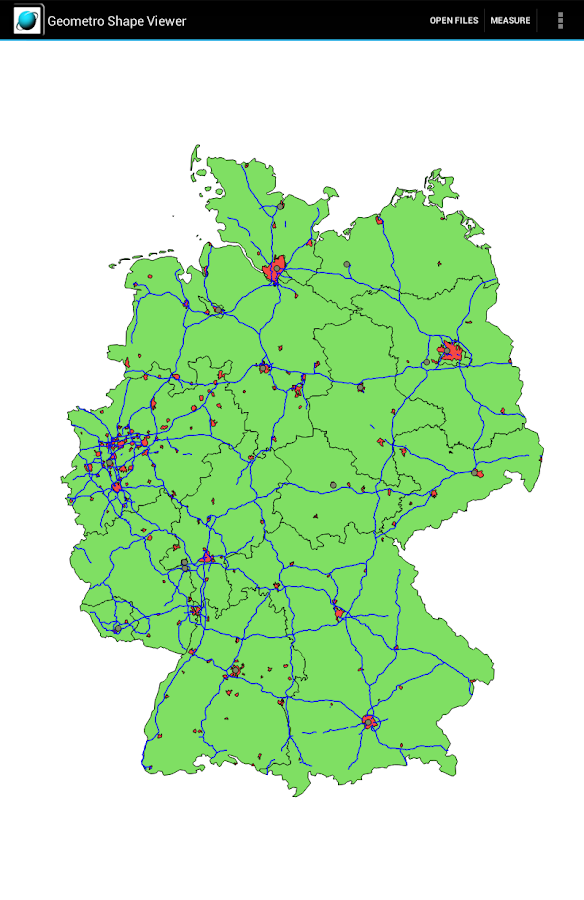
Shapefile Viewer Free
Can anyone recommend a suitable programme please? Many thanks.
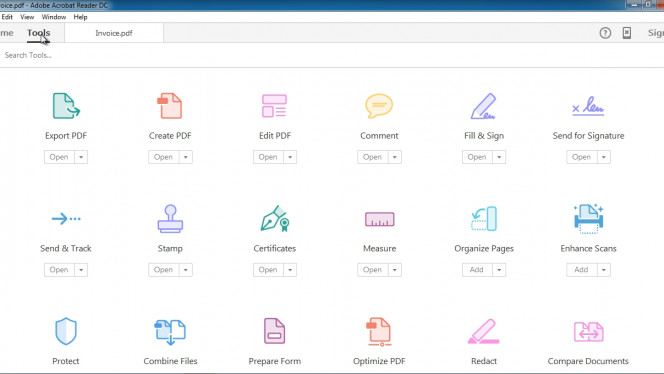
Free Shapefile Viewer DescriptionThe free AvisMap Viewer opens most GIS/CAD and raster image file types and most ArcView, ArcExplorer, and MapInfo projects. Besides just opening and viewing files, the Viewer supports an extensive list of features including visual layer properties control, legend control, thematic mapping, spatial and attribute querying, custom labeling, on-map measurements, hyper-linking, PDF export and much more.Because the GIS Viewer is compiled from the AvisMap Map Engine, it provides an easy way to evaluate the AvisMap technology and support for various data formats and common GIS functionality. The free Viewer can be used to generate AvisMap project files that are compatible with any other AvisMap product or custom applications created from the AvisMap GIS Engine.The AvisMap Desktop product extends the free Viewer by adding an extensive set of features for editing, digitizing, merging, exporting, converting (between formats), building/correcting map topology, etc. DisclaimerFree Shapefile Viewer is a product developed. This site is not directly affiliated with. All trademarks, registered trademarks, product names and company names or logos mentioned herein are the property of their respective owners.All informations about programs or games on this website have been found in open sources on the Internet. All programs and games not hosted on our site.
When visitor click 'Download now' button files will downloading directly from official sources(owners sites). QP Download is strongly against the piracy, we do not support any manifestation of piracy.
If you think that app/game you own the copyrights is listed on our website and you want to remove it, please contact us. We are DMCA-compliant and gladly to work with you. Please find the DMCA / Removal Request below. How to uninstall Free Shapefile Viewer?How do I uninstall Free Shapefile Viewer in Windows Vista / Windows 7 / Windows 8?. Click 'Start'.
Click on 'Control Panel'. Under Programs click the Uninstall a Program link. Select 'Free Shapefile Viewer' and right click, then select Uninstall/Change. Click 'Yes' to confirm the uninstallation.How do I uninstall Free Shapefile Viewer in Windows XP?. Click 'Start'. Click on 'Control Panel'. Click the Add or Remove Programs icon.
Click on 'Free Shapefile Viewer', then click 'Remove/Uninstall.' . Click 'Yes' to confirm the uninstallation.How do I uninstall Free Shapefile Viewer in Windows 95, 98, Me, NT, 2000?.
Click 'Start'. Click on 'Control Panel'. Double-click the 'Add/Remove Programs' icon. Select 'Free Shapefile Viewer' and right click, then select Uninstall/Change. Click 'Yes' to confirm the uninstallation. Frequently Asked Questions. How much does it cost to download Free Shapefile Viewer?Nothing!
Arcview Download
Download Free Shapefile Viewer from official sites for free using QPDownload.com. Additional information about license you can found on owners sites.
How do I access the free Free Shapefile Viewer download for PC?It's easy! Just click the free Free Shapefile Viewer download button at the top left of the page.
Clicking this link will start the installer to download Free Shapefile Viewer free for Windows. Will this Free Shapefile Viewer download work on Windows?Yes!
The free Free Shapefile Viewer download for PC works on most current Windows operating systems. Related Apps.